- Radar-as-a-Service
- Posts
- RaaS #572: Grayscale Takes Bittensor to Wall Street!
RaaS #572: Grayscale Takes Bittensor to Wall Street!
Zama Ships Confidential Stablecoins, Unleash Protocol Loses $3.9M: GM Web3!

Radarblock xyz
December 31, 2025
SQD Launches Revenue Pool, Fabric Foundation is Live, and Moar!
Quick Intro: Radarblock is a Web3-native growth agency that increases awareness, TVL, volume, and social metrics for its clients over a consistent time frame without uncertainty or confusion. All tweets are hyperlinked; click to view them on X.

Grayscale filed an S-1 to convert its Bittensor Trust into an ETP listed on NYSE Arca. If approved, TAO exposure would become available through standard brokerage accounts, marking another step in bringing AI-native crypto assets into TradFi rails. Approval isn’t guaranteed, but the intent is loud.

Zama announced its protocol is now live on mainnet, completing the first confidential USDT transfer on Ethereum. Privacy-preserving stablecoins just moved from theory to execution, following Zama’s recent tokenomics reveal.

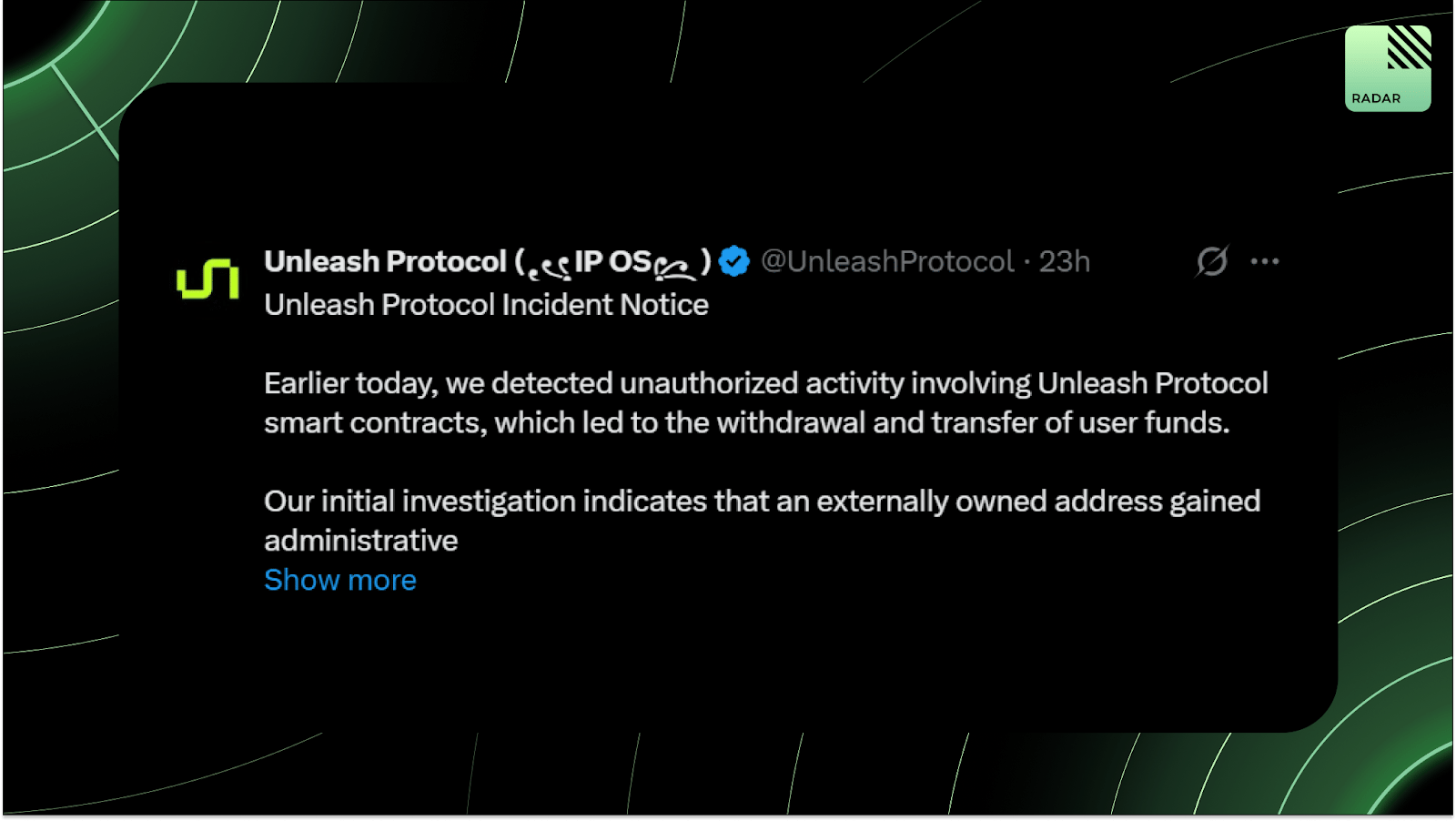
Unleash Protocol confirmed a $3.9M exploit caused by a governance lapse that allowed an attacker to seize control and drain assets. Funds were routed through Tornado Cash before landing on Ethereum. Another reminder that governance is part of the attack surface.
Overtake said a sharp drop in the TAKE token was caused by derivatives liquidations, not a security breach. The team confirmed all foundation and team wallets remain secure and promised a detailed update.


Signs that you are depressed. Number 1:
From January 1, 2026, early adopters of the OECD’s Crypto-Asset Reporting Framework will begin collecting standardized user data. Exchanges must now track balances, transactions, and tax residency, with data shared across borders. Compliance just became unavoidable.

SQD rolled out its Revenue Pool tied to enterprise blockchain data usage. Starting with limited capacity, the pool will expand as demand grows from clients like Deutsche Telekom and DeFi protocols. Infra monetization, but make it boring and sustainable.


Your daily dose of bite-sized crypto news.
The UK plans to fully regulate crypto under FCA-style licensing by 2027.
Eric Balchunas says recent BTC price action looks like ETF “heartbeat” trading, not real sentiment.
Tether minted 1B USDT at the treasury over the past 12 hours on the Tron Network.
Prenetics paused BTC buying to focus capital on scaling IM8, which is growing fast.
Li.Fi logged its busiest day ever on Christmas Eve, processing nearly 780k transactions.
Modulr launched its testnet, marking the final phase before mainnet. The team plans stress-test missions starting January 2026, rewarding users for breaking things. Incentivized chaos, by design.

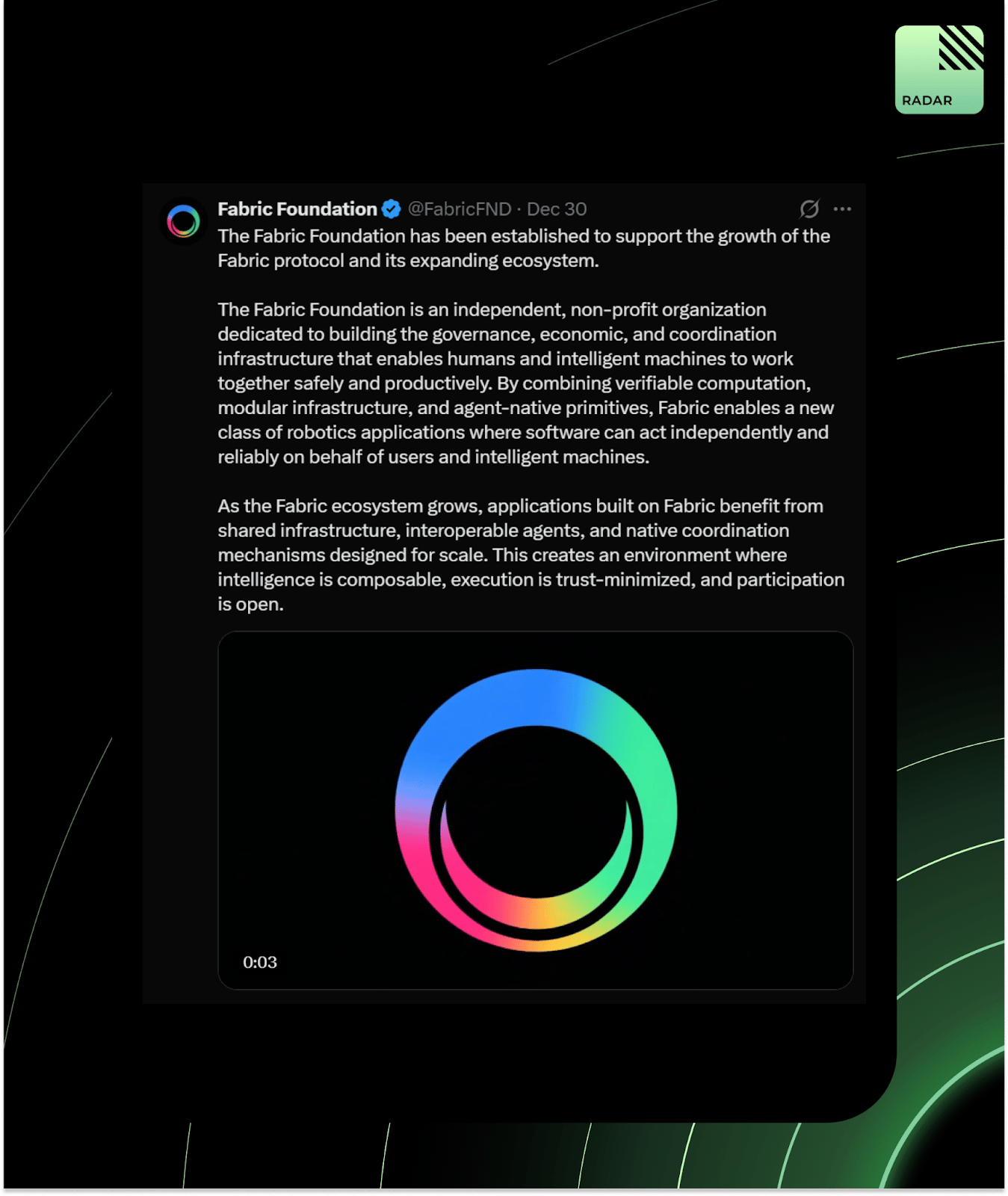
The Fabric Foundation launched to coordinate governance for open robotics and AGI. Built on OpenMind’s robot OS and Fabric protocol, it aims to standardize identities, payments, and coordination for a future machine economy.

This hits too close to home.

Want RaaS without digging through your inbox? Our Telegram channel gives you the same daily crypto roundup in a quick, scrollable format. Easy to read, easy to share. Join here: RaaS Telegram Group.
Top Gainers: DLC, ELIZAOS, OMNI, TRADOOR, LYN.


Looking back at 2025, here’s a recap of some of the most thought-provoking reads we’ve seen as the year wraps up.
Therosieum explains why crypto struggles to build anything long-term. Shorter narrative cycles, liquid exits, and VC incentives force founders into constant pivots. Crypto rewards starting new things, not finishing them.
Tulipking argues that prediction markets are the next market supercycle. Polymarket isn’t just betting; it collapses options, insurance, and event risk into a single primitive, turning markets into a way to fund outcomes, not just predict them.
SystematicLS frames “degeneracy” as a rational response. Locked-out generations turn to high-variance markets because patience no longer pays. Speculation becomes one of the last places people feel agency.
Luca Netz says memecoins must evolve into social currencies. Memecoins monetize virality. Social currencies create it, combining culture, IP, and execution into tokens that can survive beyond hype.
a16z Crypto’s State of Crypto 2025 says the industry has grown up. Institutions arrived, stablecoins went mainstream, ETFs scaled, and crypto became real financial infrastructure instead of a narrative-driven experiment.
The Web3 Foundation announced changes to its grants program, shifting toward targeted, product-driven funding and stronger OpenGov alignment. Less spray-and-pray, more shipping.

Winklevoss-backed Cypherpunk Technologies bought another 56,418 ZEC, bringing total holdings to nearly 2% of the circulating supply. Privacy coins may be quiet, but someone’s clearly accumulating.

That’s all for this year, see you again in 2026. Happy New Year!